Introduction
The sentiment that Dragon Quest IX can be played for hundreds of hours is a popular one, so during my playthrough I paid close attention to how I used my time. As I expected there was no single activity that dominated my experience, but rather a combination of interlocking gameplay elements.
Since DQ IX offers such a plethora of content, I have not seen all of its facets despite finishing the main quest. With that caveat in mind — which makes some of the below points conjecture — here are my notes on why it takes so long to play the game, and why people might actually want to spend so much time playing it:
Levels
- Although Dragon Quest IX has a bit of “grinding,” i.e., fighting monsters in order to gain experience and grow stronger, it’s not a must for forward progression. Players are initially rewarded with fast level-ups, but that slows down pretty quickly. In fact, in my playthrough it wasn’t uncommon to fight two bosses in a row (and the enemies leading up to them), without gaining a level.
An interesting side note about levels: characters gain experience relative to their level, with highest-level characters gaining the most experience. Although not a big issue, this means that it takes longer for lower-level characters to catch up with the rest of the party.
- Each character has a job, i.e., a class, and each job contains a series of linear ability-paths. Each of these paths can be upgraded with ability points, and these points are sporadically awarded when a character gains a level. Abilities are almost exclusively integrated into the combat system and represent new and unique battle options (complete with flashy effects).
However, maxing out a character’s level will not reward the player with enough ability points to purchase all of his or her potential abilities. As a result, the player can choose to “reset” a level 99 character back to level 1 while retaining all of the earned skills. This allows the player to collect more ability points, but forces each character to max out his or her level multiple times before mastering a single job.
- There are a total of 12 jobs in the game, and each character can take on any one of these professions. Characters that change jobs retain all of their abilities, but are forced to start off at level 1. This flexibility allows the player to thoroughly customize his party, but requires a tremendous amount of grinding.
Money
- Money is gained alongside experience as enemies are defeated, but it takes a long time to accumulate a significant amount of cash. By the time the player has gathered enough money to outfit his party, the characters have usually gained enough levels to easily overpower the area boss even without the new equipment.
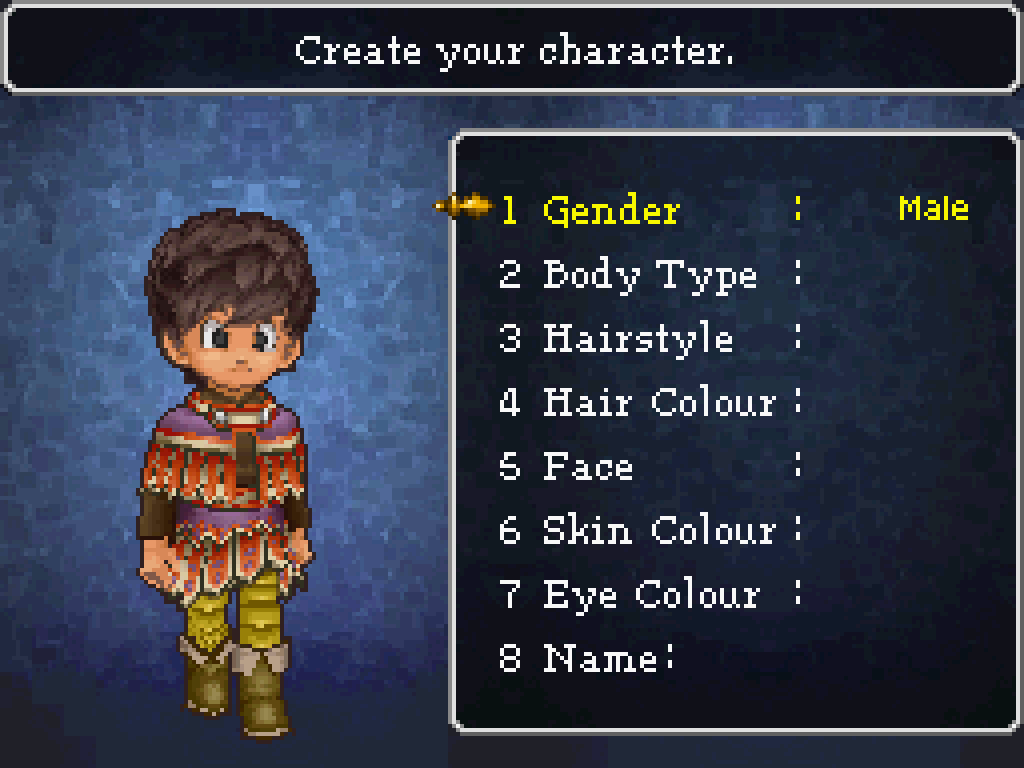
It’s also worth noting that each character’s appearance is reflected by what he or she is wearing. This sort of aesthetic customization is important to many players, and DQ IX constantly facilitates it by displaying the entire party in both the combat and the exploration mode.

- Some stores offer precious alchemy ingredients that can be rather difficult to obtain in the wild. As a result, it’s often a good idea to purchase them despite their steep price.
Alchemy also relies on regular weapons, armour and accessories as base ingredients. Most of these can only be bought in stores, which further extends the amount of money needed in order to create new items.

- Nintendo’s virtual store is updated every week day with new items for purchase. These offerings are usually quite expensive, but many are unique to the store or simply hard to find in the game.
Since items can also be shared with other players, there’s an added incentive to indulge in pack-rat behaviour.
Sidequests
- Sidequests are not a “cheap” way of extending a game as they typically require manually scripted events. DQ IX contains nearly 200 of these, many of which are of the “slay this monster” and “bring back this item” variety. These missions can be fairly time consuming, especially when they require the player to finish off a specific enemy with a specific ability. However, this approach does add a nice bit of variety to the combat and encourages the player to explore some of its deeper mechanics.
- The rewards for completing sidequests are rarely revealed ahead of time, but they often consist of items not readily available at the time the quest is offered. Some quests even unlock all new jobs, so the incentive to complete them as they are encountered is always there.
- The availability of quests is often based on such prerequisites as previously completed quests and grottos, character levels, and even the completion of the main game itself. This results in new quests often popping up in old areas, encouraging the player to revisit old locations. The limit of 10 active quests accentuates this even further as completing all quests as they are offered is not always possible.

Alchemy
- Combining various ingredients into new items is the only way to obtain certain types of items. These are also tied into combat proficiency and character aesthetic, giving the player two strong incentives to “alchemize” as often as possible.
- Unique alchemy recipes are found in each new area, encouraging the player to explore every nook and cranny and return to the alchemy screen on a regular basis.
- Various ingredients can be found in the game world, providing something new to collect virtually every time the player wanders out of a town or a dungeon. The frequency at which these items respawn and their respawn quantity varies, but not on a static basis.
From what I understand, the scarcity of ingredients is game-dependent, encouraging players to visit each other’s worlds (where some ingredients might be more common than in their own) in a co-op multiplayer mode.

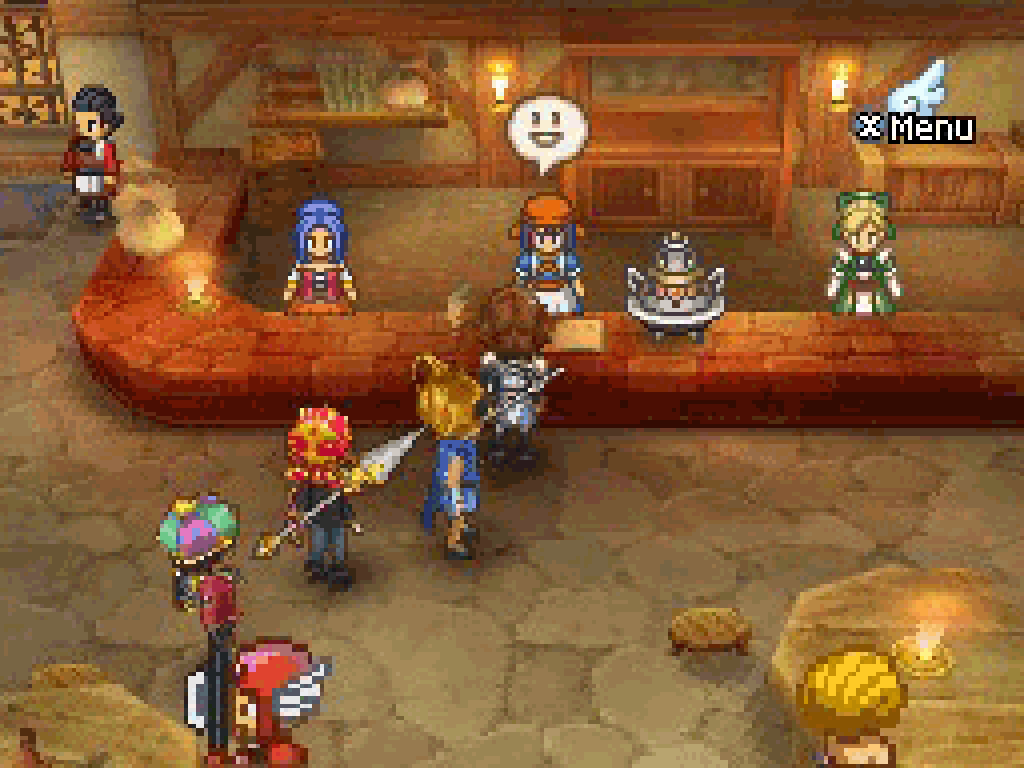
- Alchemy ingredients can also be obtained by defeating enemies or stealing from them, but this doesn’t happen all that often. However, since stealing from enemies is the only way to get certain types of ingredients, this is a must for completing one’s alchemy list.
- Some forged items cannot be used or equipped as they simply serve as unique ingredient for other alchemy recipes. This often creates a long string of alchemizations that require a large amount of rare materials in order to obtain some of the more powerful items.
Grottos
- Grottos are randomly generated dungeons that are completely optional but a large draw of the game. Each dungeon contains a handful of floors based on one of the core tile sets and a specific boss. These bosses are not found anywhere else, and can often be much more powerful than the final boss of the actual game.
Since grottos don’t actually contain that many treasure chests, the unique bosses (often taken from previous Dragon Quest titles) are a big incentive for exploring them.
- Grottos are not readily accessible and must be manually located by the player. Equipping a grotto map replaces the minimap with a small sub-section of the area where the grotto is located. This location is not highlighted in any way, and is only hinted at when the player walks close to it. Whenever this happens, an exclamation point appears over the protagonist’s head allowing the player to “investigate” the area and reveal a secret entrance.
Since the minimaps are not that detailed and the grotto maps represent a zoomed-in view, they can be quite difficult to discover even with the aid of online resources.
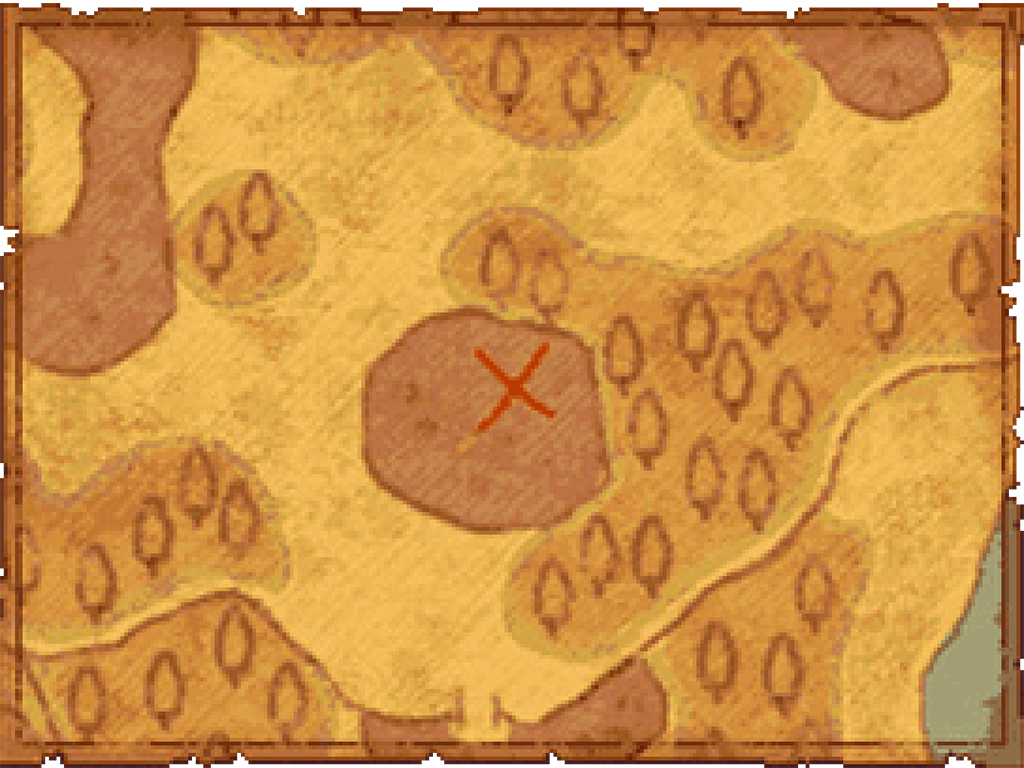
- Defeating the boss of a single grotto automatically rewards the player with a map to a new one. Bosses can also be fought multiple times, and each one has a small chance of dropping a fairly good item once defeated. This is not always a huge incentive, but it encourages the player to occasionally revisit a completed grotto.
- Once the boss of a grotto is defeated, its map can be shared with other DQ IX players. This asynchronous connectivity has proven quite popular in Japan (and occasionally in the West), especially with the maps that facilitate quick grinding.
Conclusion
Overall a large part of DQ IX could have been shorter and more user friendly, but the game does a good job of providing the player with incentives. In the short term, new items and abilities are always just around the corner. In the long term, full customization and numerous achievements provide extended meta-goals. All these elements are also strongly interconnected, and since there are so many of them, the player is always guaranteed a steady stream of rewards.
The store is updated every *day* at 8AM GMT.
Ahhh, my mistake. I guess I haven’t used the store that often as my home network relies on WPA-PSK, not WAP. My DSi XL actually supports the more secure connection, so it’s really annoying that DQIX and other titles come packaged with the old interface instead of letting the OS handle networking.
I never gave much thought to DQIX’s system, but they are quite interlinked. I wish the grinding was a little faster, it does make for a game that can be played for hundreds of hours.
I’m a fan!